How to Start a Spring Walking Plan When You Have Chronic Knee Pain (Without Making It Worse)
Your knee hurts and you want to get outside this spring but you're afraid of making it worse. Here's the actual 6-week walking plan a Doctor of Physical Therapy would give you. Start where your body is right now and build from there.
By: Dr. Shari Miller, PT, DPT, OCS
Spring is here. The weather's warming up. Everyone's outside. And you want to be out there too...but your knee has a different opinion.
Maybe you tried a walk last weekend and paid for it that night. Maybe you haven't walked more than to the mailbox in months because you're not sure what will happen if you push it.
Here's what I want you to know: walking is one of the best things you can do for a knee that hurts. But how you start matters, a lot.
This isn't a "just get out there and push through it" mentality or me telling you to just go walk. Keep reading if you want the kind of advice I'd give you if you were sitting across from me in a session. So let's get into it!
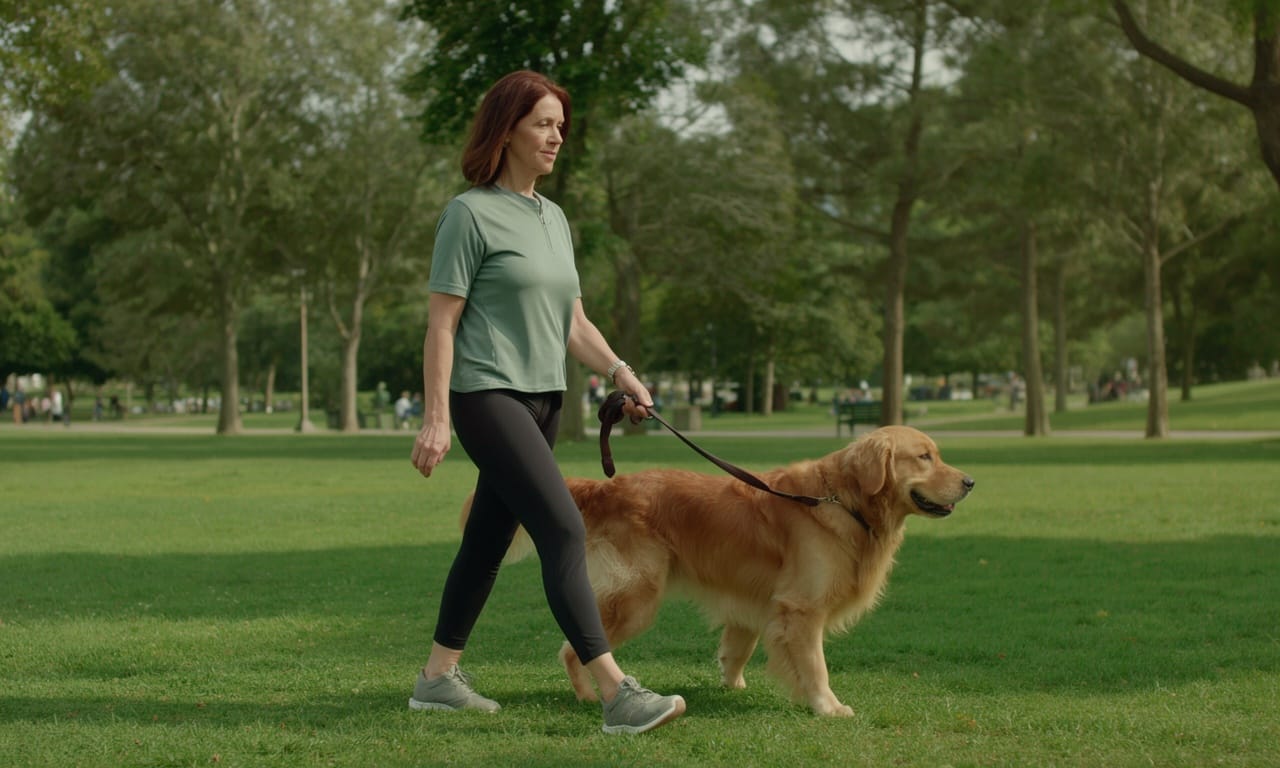
Why Walking Actually Helps Knee Pain (Even When It Feels Like It Shouldn't)
This is the part that surprises most people.
When your knee hurts, your instinct is to rest it. And I get that, it makes sense. If something hurts stop doing it, right?
But here's what's actually happening when you rest for weeks or months: the muscles around your knee get weaker. Your joint gets stiffer. The cartilage that cushions your knee joint? It gets its nutrition from movement specifically from the compression and release that happens when you walk. Without that, the cartilage doesn't get what it needs to stay healthy.
So the thing that feels like it's protecting you, rest, is often what's keeping you stuck.
Walking sends blood and nutrients to the knee joint. It strengthens the muscles that support your knee (your quads, your hamstrings, your glutes). It lubricates the joint with synovial fluid, think of it like it's your body's natural WD-40.
The key is how you start.
The 6-Week Spring Walking Plan for Knee Pain
This plan is built on one principle: progressive loading. It's not ok to pick up where you left off six months ago. You start where your body is right now and build from there.
Before your first walk, here's the rule: all of this should feel relatively manageable.
A little discomfort, like a muscle working or your knee feeling "aware", I'm okay with that. Sharp, stabbing pain? Stop. That's your body telling you something different, and we need to listen.
Weeks 1–2: The Foundation
Walk 10 minutes, 3 days this week. That's it.
I know it doesn't sound like much. But we are testing how your body responds. You want to know: how does the knee feel during the walk? How does it feel two hours later? How does it feel the next morning?
If you feel good after 10 minutes on day one, that doesn't mean you should do 30 minutes on day two. I see this constantly. Someone feels great, doubles the time, and then can't walk for three days. That cycle: try, overdo it, hurt, rest, repeat...is what we're breaking here.
Walk on flat, even ground. A neighborhood sidewalk, a paved park path, a track. Save the hills and uneven trails for later.
What to watch for: Pay attention to more than just pain. How long can you walk before you feel your knee? How's your sleep that night? Are you favoring one side? Those little details tell us a lot about what's happening.
Weeks 3–4: Building
Add 2–3 minutes to each walk. You're working up to 15–20 minutes, still 3 days per week.
Now's the time to start noticing your gait aka how you're actually walking. A lot of people with knee pain develop compensation patterns without realizing it. You might shift your weight to the other side. You might shorten your stride on the painful leg. You might put your painful leg forward on the stairs so the other one does all the work and hate that you're doing it.
Those habits are your body's way of protecting you. But after a while, your body forgets to stop doing that and those compensations start creating new problems.
Here's what to focus on: land heel first, roll through the foot, push off through the ball of your foot. Think about engaging your glutes, those muscles are supposed to be doing a lot of the work to stabilize your knee, and in many people with knee pain, they've essentially clocked out. You'll know you do this if the size of your steps (step length) is pretty short.
Weeks 5–6: Expanding
Add a fourth walking day. Work up to 25–30 minutes per session.
You can start introducing gentle variety here: a slight incline, a gravel path, a grassy park. But increase one variable at a time. Don't go longer AND harder AND on new terrain all at once.
If you've been consistent through weeks 1–4, something important has happened: the muscles around your knee are stronger than they were six weeks ago. Your body has adapted to the demand you've placed on it. You've built a foundation.
This is how it works. Not the all-or-nothing restart. The slow, steady build.
5 Things That Will Make or Break Your Walking Plan
1. Warm up before you walk (yes, really)
Five minutes of gentle movement before your walk makes a meaningful difference. Your knee joint has fluid inside it called synovial fluid that acts as a cushion. When you've been sitting or sleeping, that fluid thickens. A brief warm-up gets it moving again.
Try this: seated knee extensions (straightening your leg out in front of you, holding for 2 seconds, lowering back down), ankle circles, and standing hip circles. Nothing complicated. Just get the joints moving before you ask them to work.
2. Wear the right shoes
This sounds basic, but worn-out shoes are one of the sneakiest contributors to knee pain. Every step you take sends force through your foot, up through your ankle, and straight into your knee. If your shoes have lost their cushioning and support, your knee absorbs the impact that your shoes should be handling.
Replace walking shoes every 300–500 miles, or roughly every 6 months if you're walking regularly. If the tread is worn unevenly or the midsole feels flat when you press on it, it's time.
3. Walk when your knee feels best
Pay attention to your pain patterns. Are you stiff in the morning? Don't force an early walk, go out in the afternoon when things have loosened up. Do you feel better after moving around for a bit? Use that window.
If you take an anti-inflammatory, time your walk for when it's working. This isn't cheating, it's strategy.
4. Don't skip the post-walk cool-down
Walk at a slower pace for the last 3–5 minutes, then stretch. Quad stretch (grab your ankle behind you, hold for 30 seconds each side), calf stretch (lean into a wall with one leg back), and a standing hamstring stretch.
I know stretching isn't anyone's favorite part. But tight quads pull on your kneecap. Tight calves change how your foot hits the ground. Both of those things directly affect your knee. Five minutes of stretching after a walk is an investment, not a bonus.
5. Track the small wins
People with knee pain tend to focus on what they can't do yet. I want you to flip that.
Can you walk further than you could two weeks ago? Did you sleep better last night? Did you walk without thinking about your knee for a stretch? Did you take the stairs without planning it?
Those are the wins. Write them down. They matter more than you think.
When to Reach Out for Help
This plan works for a lot of people. But if you're consistently feeling sharp pain during or after walks, if your knee is swelling after activity, or if you're not seeing any improvement after 3–4 weeks of consistent walking, that's your body telling you it needs more specific input.
The walking plan is the starting point. For some people, the underlying issue is weak glutes. For others, it's an ankle that's restricted and forcing the knee to compensate. For others, it's a compensation pattern from an old injury that never got addressed.
That's what I help people figure out. Not just "here are some exercises" but why your knee is doing what it's doing, and what specific path forward looks like for your body.
Your knee is not broken. It's compensating. And spring is the perfect time to start teaching it something new.
About Dr. Shari Miller Dr. Shari Miller (PT, DPT, OCS) is an orthopedic specialist and founder of Stride Lab. She helps active adults understand why their body is doing what it's doing and gives them a clear, manageable path forward.
Related: Knee Function Self Test
Have questions about your specific situation? Reach out, I'm happy to help.